
Glimpses from India and around the world that will make you smile and cry.
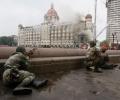
The Maharashtra government informed the Bombay High Court that Faheem Ansari, acquitted in the 26/11 terror attack case, was denied a police clearance certificate due to ongoing suspicion of being a member of a banned terror organization. Ansari sought the certificate to operate an autorickshaw.
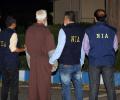
A court in New Delhi has sent Tahawwur Hussain Rana, the mastermind behind the 2008 Mumbai terror attacks, to 18 days of National Investigation Agency (NIA) custody. The court cited the need for sustained interrogation to uncover the extent of the conspiracy and the involvement of multiple targets across India, including New Delhi. Rana, a Pakistani-origin Canadian businessman and close associate of 26/11 conspirator David Coleman Headley, was extradited to India after the US Supreme Court dismissed his review plea against his extradition.
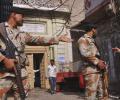
The chief priest of the biggest Hanuman temple in Pakistan, Sant Ram Nath Mishra, has said that the Pakistani Army has always supported Hindus in their struggle against extremist groups in the country. Mishra, who is currently on a visit to Hindu religious sites across India, recounted the struggle of the Panch Mukhi Hanuman Mandir in Karachi, which was encroached upon over the decades but was restored following a landmark Supreme Court ruling in 2018. He said that the Pakistani Army and government swiftly implemented the Supreme Court's decision to return the temple land, despite opposition from hardline groups. Mishra also highlighted the need for easing visa restrictions between India and Pakistan, allowing Hindus on both sides to visit religious sites in each other's countries.
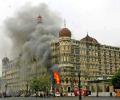
Tahawwur Rana, accused of involvement in the 2008 Mumbai terror attacks, is expected to be extradited to India from the United States soon. The US Supreme Court denied his last-ditch effort to stop his extradition, moving him closer to being handed over to Indian authorities. Rana's extradition is expected to help probe agencies expose the role of Pakistani state actors behind the attacks and shed new light on the investigation. He is associated with Pakistani-American terrorist David Coleman Headley, one of the main conspirators of the 26/11 attacks.

Mumbai terror attack accused Tahawwur Rana has moved an 'emergency application' with the United States Supreme Court against his extradition to India, claiming that he will be tortured there since he is a Muslim of Pakistani origin.

This was Rana's last legal chance not to be extradited to India. Earlier, he lost a legal battle in several federal courts, including the US Court of Appeals for the North Circuit in San Francisco.
Tahawwur Hussain Rana, a Pakistani-born Canadian national accused of playing a role in the 2008 Mumbai terror attacks, has been extradited from the United States to India. Rana was arrested in the US in 2009 and convicted in 2011 for providing material support to the Lashkar-e-Taiba terror group, which carried out the Mumbai attacks. He had been fighting extradition since 2012, but the US Supreme Court ultimately denied his review petition, paving the way for his transfer to India. Rana will now face trial in India for his alleged role in the attacks, which killed 166 people.
Tahawwur Rana, accused in the 2008 Mumbai terror attacks, has renewed his plea for a stay on his extradition to India, citing health concerns and alleging potential torture. He argues that his extradition would violate US law and the UN Convention Against Torture. Rana's lawyers claim he is at risk of being subjected to torture in Indian detention facilities due to his Pakistani origin, Muslim religion, and medical conditions. The US Supreme Court had previously denied his emergency bid for a stay, but he has now appealed to Chief Justice John Roberts. The US government has declined to provide information on any commitment from India regarding Rana's treatment, further fueling his concerns.

A multi-agency team has gone to the US and all paperwork and legal issues are being completed with US authorities to bring him to India, they said.
Tahawwur Rana, accused in the 2008 Mumbai terror attacks, has been extradited to India after the US Supreme Court denied his last-ditch effort to avoid being sent back. Rana, a close associate of David Coleman Headley, another key conspirator in the attacks, was expected to be extradited "shortly" after his legal appeals failed. This decision comes after a multi-agency team from India traveled to the US to complete all necessary paperwork and legalities with the US authorities. Rana's extradition marks a significant development in the pursuit of justice for the victims of the Mumbai attacks.

Chief Minister Omar Abdullah strongly criticized linking Jammu and Kashmir's political future to acts of terror, asserting that Pakistan cannot influence decisions on the region's statehood through terrorism. He announced a signature campaign to press for the restoration of statehood.

The final NRC, a list of Indian citizens residing in Assam, was released in 2019 by excluding 19,06,657 people. However, it has not been notified by the Registrar General of India, leaving the controversial document without any official validity.
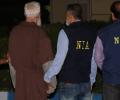
Tahawwur Hussain Rana, a Canadian national accused of involvement in the 2008 Mumbai terror attacks, has been extradited to India from the United States. Rana's interrogation is expected to shed light on the role of Pakistani state actors in the attacks, which claimed 166 lives. Indian authorities are particularly interested in his travels across India in the days leading up to the attacks, including visits to Hapur, Agra, Delhi, Kochi, Ahmedabad, and Mumbai. Rana's extradition follows a lengthy legal battle, with the US Supreme Court ultimately denying his application to challenge it. Rana is known to be associated with Pakistani-American terrorist David Coleman Headley, one of the main conspirators of the 26/11 attacks. The investigation into the Mumbai attacks has implicated senior members of terror outfits Lashkar-e-Taiba (LeT) and Harkat-ul Jihadi Islami (HuJI), as well as officials from Pakistan's Inter-Services Intelligence (ISI).

The home ministry said the central government would continue to welcome the discussion with LAB and KDA through the high powered committee on Ladakh or any such platform.
According to the chargesheet, Rana played a crucial role in supporting terrorist David Coleman Headley, a Pakistani-American operative linked to Lashkar-e-Taiba, by facilitating his reconnaissance missions across Mumbai.

The court observed that protection of the floodplains aimed to secure the fundamental human right to a clean and healthy environment for Delhi residents and future generations.

A Pakistani court has dismissed a plea to rename a chowk in Lahore after Bhagat Singh, citing a retired military officer's claim that the freedom fighter was not a revolutionary but a "criminal". The Lahore High Court upheld the decision of the local corporation, which had scrapped the plan to rename Shadman Chowk and place a statue of Singh there.

The Bombay High Court acquitted all 12 accused in the 2006 Mumbai train blasts case, citing a failure by the prosecution to prove their guilt and raising serious concerns about the investigation and evidence presented.

Shiv Sena (UBT) MLA Aaditya Thackeray on Friday slammed the Board of Control for Cricket in India (BCCI) over the India and Pakistan clash in the ongoing Asia Cup 2025.
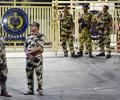
Security has been heightened outside the National Investigation Agency (NIA) headquarters in New Delhi, where Tahawwur Rana, the mastermind of the 2008 Mumbai terror attacks, is being held following his extradition from the United States. Rana was brought to India after the US Supreme Court dismissed his review plea against extradition. The NIA secured an 18-day custody of Rana after he was produced before a special court in Delhi. Additional police and paramilitary forces have been deployed to ensure law and order. The extradition of Rana, a close associate of David Coleman Headley, the main conspirator of the Mumbai attacks, is a significant development in the investigation into the 2008 attacks.
Tahawwur Hussain Rana, a Pakistan-born Canadian national and close associate of David Coleman Headley, is set to be extradited to India from the US. Rana was involved in the planning and execution of the 2008 Mumbai terror attacks, which killed 166 people, including six Americans. He assisted Headley in obtaining a visa for India, established a front company in Mumbai, and helped in reconnaissance of targets in Mumbai and New Delhi. Rana was convicted in the US for providing material support to Lashkar-e-Taiba (LeT) and sentenced to 14 years in prison. His extradition to India will allow authorities to question him about his involvement in the Mumbai attacks and potentially uncover new information about the role of Pakistani state actors.
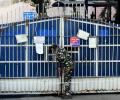
Tahawwur Hussain Rana, a Pakistani-born Canadian national accused in the 2008 Mumbai terror attacks, is likely to be lodged in a high-security ward in Tihar jail upon his extradition from the US. Rana, a close associate of David Coleman Headley, a US citizen who was also involved in the attacks, will be brought to India after his last-ditch attempt to evade extradition was rejected by the US Supreme Court. The attacks, which lasted nearly 60 hours, resulted in the deaths of 166 people and sent shockwaves across the country.

When the government chooses to either ignore or use identity documents only when it suits them, it shakes people's sense of stability, notes Shyam G Menon.
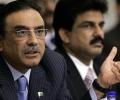
In a setback to former President Asif Ali Zardari, a Pakistani court on Friday reopened five anti-corruption cases against him and sought his response to the charges within two weeks.
The central government has appointed advocate Narender Mann as special public prosecutor to conduct trials and other matters related to the National Investigation Agency case RC-04/2009/NIA/DLI against Tahawwur Hussain Rana and David Coleman Headley, who is in a US prison following a plea deal.
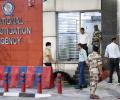
Tahawwur Hussain Rana, the mastermind behind the 2008 Mumbai terror attacks, has been taken into 18-day custody by the National Investigation Agency (NIA) in India. Rana was extradited from the United States after years of legal battles and will be questioned to unravel the complete conspiracy behind the attacks.

A Delhi court on Monday extended by 12 more days the NIA custody of 26/11 Mumbai attack accused Tahawwur Hussain Rana.
He was sent to judicial custody on May 9 and lodged in Tihar jail after his custodial interrogation by the NIA.
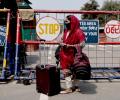
The Supreme Court on Friday directed authorities not to deport to Pakistan six members of a family, who allegedly overstayed their visa, till their citizenship claim is verified.

The blame must be shared by the investigating agencies, the government of the day and the nation at large, points out Colonel Anil A Athale (retd).
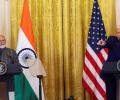
United States President Donald Trump on Thursday announced the extradition of the 26/11 Mumbai terror attack accused Tahawwur Rana to India and said he will face justice.
When the government chooses to either ignore or use identity documents only when it suits them, it shakes people's sense of stability, notes Shyam G Menon.
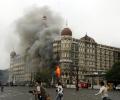
Mumbai 'Chai Wala' known as 'Chhotu' aka Mohammed Taufiq, whose alertness saved lives during the 26/11 Mumbai terror attacks stated that there is no need for India to provide Tahawwur Rana with cell and Biryani and facilities which were provided to Ajmal Kasab, one of the terrorists involved in Mumbai attacks.
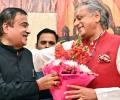
Senior Congress leader Shashi Tharoor welcomed the extradition of Tahawwur Hussain Rana, a key accused in the 26/11 case, and said everyone associated with the conspiracy of the Mumbai terror attacks must face the court of justice. He described Rana's extradition as a "step forward for justice." Rana, a Pakistan-born Canadian national and close associate of David Coleman Headley, is being brought to India after his last-ditch attempt to evade extradition failed. Tharoor expressed hope that the interrogation of Rana would provide more details about the Mumbai attacks and said he was "very glad" that Indian authorities managed to get Rana's custody.

The judge said the attitude of the accused left no option for the court, but to freeze Musharraf's bank accounts and confiscate his property.

The President took the decisive move on May 27.

The Telangana High Court upheld a trial court's verdict handing out death penalty to five senior operatives of banned terror outfit, Indian Mujahideen, involved in a bomb blast that left 18 people killed in 2013. The court dismissed the criminal revision appeal filed by the IM operatives while upholding the NIA court's judgment. The five members, including IM co-founder Mohd Ahmed Sidibapa alias Yasin Bhatkal, Pakistani national Zia-ur-Rahman alias Waqas, Asadullah Akhtar alias Haddi, Tahaseen Akhtar alias Monu and Ajaz Shaikh, were convicted in 2016. The special court for NIA cases here awarded capital punishment to five convicts treating it as a rarest of the rare case. The high court, after conducting a detailed hearing in the appeals filed by the convicts, confirmed the death sentence of the five IM operatives.

The reality is that far from being friendless, India is better positioned in the world than at any point post-Cold War, asserts Shekhar Gupta.
The United States has approved the extradition of Tahawwur Rana, accused of involvement in the 2008 Mumbai terror attacks, to India. The decision was announced by President Donald Trump during a joint press conference with Prime Minister Narendra Modi in the White House. India is currently working on the logistics of Rana's surrender and extradition, with several final steps to be completed before he is sent back to India. The joint statement issued by India and the US during Prime Minister Modi's visit reaffirmed their commitment to fighting terrorism and eliminating terrorist safe havens. The leaders also called on Pakistan to bring to justice the perpetrators of the 26/11 Mumbai and Pathankot attacks. Rana, a Canadian national of Pakistani origin, is currently lodged at a metropolitan detention center in Los Angeles. He is associated with Pakistani-American terrorist David Coleman Headley, one of the main conspirators of the 26/11 attacks.
